
Loading...
Loading...
When vitamin D may matter in exhaustion – and why the marker does not explain every complex fatigue pattern.
Short answer
Vitamin D can be relevant in exhaustion, but it is rarely the sole explanation for complex fatigue-related complaints.
The marker becomes more useful when interpreted together with symptoms, daily limits, and other lab values.
Persistent exertion-related worsening usually requires more context than vitamin D alone.
Vitamin D is one of the most common lab questions in tiredness and nonspecific exhaustion. That interest is understandable, but interpretation quickly becomes too broad when symptoms and course are not included.
Key points
Vitamin D is a relevant but limited context marker.
Nonspecific exhaustion almost always needs more than one value.
Symptom course and exertion response strongly shape interpretation.
ME/CFS or PEM questions remain relevant even when micronutrient context exists.
Author
Frederik Marquart
Founder & CEO, Elara Health
Review
Elara Health Medical & Research Review
Scientific and patient-centered quality review
Last updated
April 16, 2026
Vitamin D is widely known, so it is commonly considered in fatigue-related questions.
When symptoms are nonspecific, people often look for concrete and easy-to-understand explanations. Vitamin D offers a familiar anchor.
Vitamin D can be a useful part of the picture, especially when exhaustion appears together with broader general complaints.
Still, the marker does not tell you much about delayed worsening after exertion, unstable capacity, or a more complex illness pattern.
useful as a general context marker
not sufficient for complex fatigue patterns
should always be read with symptoms and course
If routine daily activities trigger disproportionate worsening, or if brain fog, PEM, or clear personal limits dominate, symptom context usually becomes more important.
At that point, the key question is no longer only whether one marker is abnormal, but which pattern explains the overall picture.
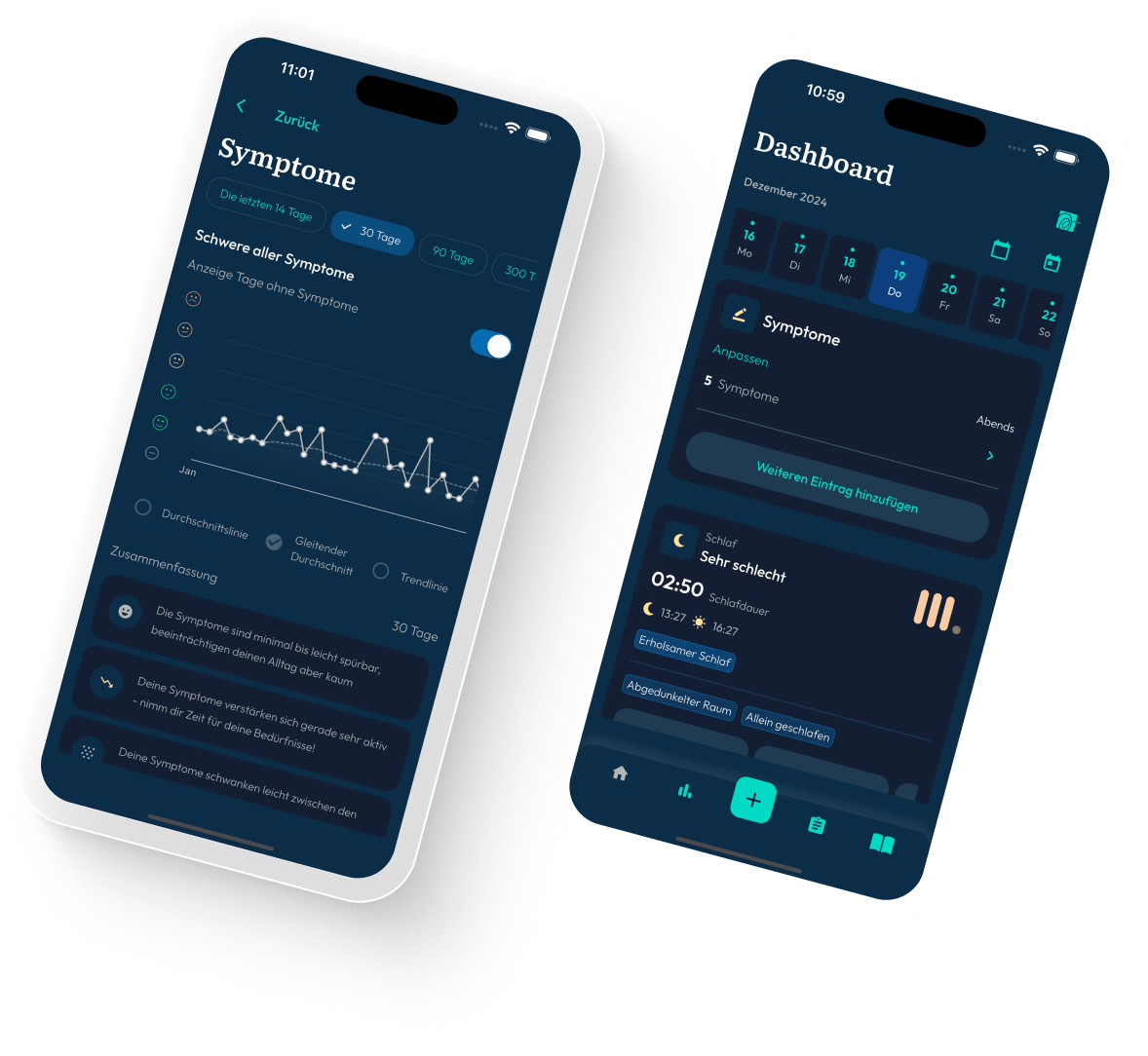
Document symptoms, energy, and possible triggers and see connections develop over time.
Not in every case. The marker may matter, but it often explains complex or exertion-related complaints only partly or not at all.
Because it is familiar, concrete, and easy to understand. In nonspecific tiredness, that makes it a common starting point.
Then interpretation usually needs to widen toward other markers, symptom course, exertion response, and broader illness context.
Every article is editorially reviewed, framed with medical context, and backed by primary sources you can verify.
Reviewed content with 3 sources
Educational context – not a substitute for medical diagnosis
Links to related knowledge, questionnaires, and methodology
When lab values alone do not explain the picture, structured symptom capture often adds the missing context.
Useful when fatigue, PEM, sleep problems, and cognitive symptoms appear together.
Helpful when fatigue is paired with widespread pain, poor sleep, and symptom severity patterns.
See all available assessments if the symptom picture is still unclear.