
Loading...
Loading...
Tracking can make pacing more practical if it stays manageable. Which data really helps and how to spot patterns without creating overload.
Short answer
Tracking helps with pacing because exertion, symptoms, and recovery can be linked more clearly over time.
Even simple tracking can reveal which activities repeatedly lead to worse days.
The goal is not data collection for its own sake, but better daily decisions.
Many people feel that data could help, but do not want to build another exhausting system. The value of tracking therefore depends less on quantity and more on clarity.
What tracking should do
show patterns across several days
make warning signs easier to notice earlier
keep cognitive effort low
simplify decisions rather than complicate them
Author
Frederik Marquart
Founder & CEO, Elara Health
Review
Elara Health Medical & Research Review
Scientific and patient-centered quality review
Last updated
April 15, 2026
Pacing often breaks down because exertion and consequences are separated in time. Tracking helps close that gap.
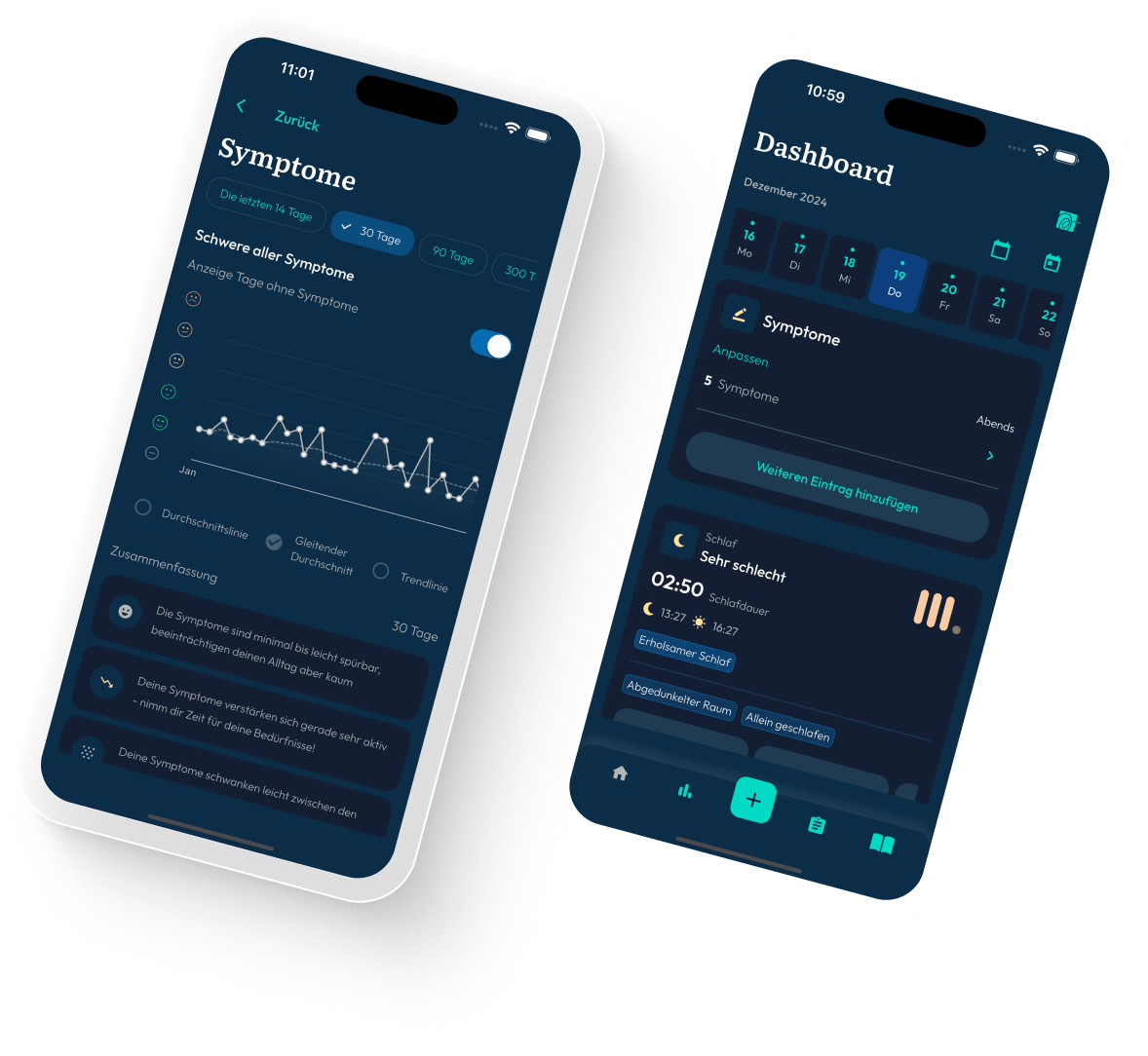
When exertion, sleep, sensory load, symptoms, and recovery are noted regularly or partly captured automatically, patterns emerge that would otherwise be easy to miss.
A small set of signals is often enough: how demanding the day felt, how sleep was, which symptoms stood out, whether cognitive or sensory load was higher, and how the next day unfolded.
Wearables can add useful context through activity, heart rate, or HRV. They help most when they support interpretation rather than create more uncertainty.
subjective exertion
symptom pattern
sleep quality
activity, heart rate, or HRV as optional context
Tracking becomes a problem when it consumes too much attention, creates guilt, or makes daily life harder in itself.
A good system reduces complexity. It does not need to provide perfect truth; it needs to offer useful signals for better decisions.
Capture exertion, recovery, and warning signs in a pacing diary – and steer daily life with data.
No. A simple, repeatable tracking habit is often enough to start learning. Apps and wearables can add value, but they are not required.
That is normal. The value often comes less from perfect single signals and more from repeated patterns over time.
Yes, if it becomes too complex. In that case, simplification matters. Tracking should support orientation, not create more pressure.
Every article is editorially reviewed, framed with medical context, and backed by primary sources you can verify.
Reviewed content with 3 sources
Educational context – not a substitute for medical diagnosis
Links to related knowledge, questionnaires, and methodology
PEM and pacing become more actionable when symptom burden and function are captured in a structured way.
Useful when delayed worsening after activity raises the question of ME/CFS-oriented symptom structure.
Best when daily limitation, recovery instability, and functional burden should be documented.
Compare all available assessments and choose the one that matches the real question.