
Loading...
Loading...
PEM does not always announce itself clearly, but many people notice recurring warning patterns. Common early changes and how to track them more reliably.
Short answer
Early signs of PEM are often not single symptoms, but small worsening patterns across several areas.
Common hints can include lower tolerance, more brain fog, poorer sleep, more sensory sensitivity, or unusually long recovery after minor tasks.
The better those patterns are tracked, the easier it becomes to intervene earlier.
Many people look for one clear “PEM alarm.” In practice, early signs are often subtler: more sensory overload, worse sleep, diffuse overwhelm, or the feeling that routine mental tasks suddenly cost much more energy.
What to look for
Early signs are individual and may shift over time.
They often show up first in cognition, sensory tolerance, or sleep.
A warning signal matters most when it repeatedly precedes worse days.
Tracking is usually more helpful than searching for one universal marker.
Author
Frederik Marquart
Founder & CEO, Elara Health
Review
Elara Health Medical & Research Review
Scientific and patient-centered quality review
Last updated
April 15, 2026
Many people report that before a more obvious PEM phase, they first notice a cluster of smaller changes. This can include more brain fog, inner agitation, increased light or noise sensitivity, or the feeling that simple tasks suddenly cost far more energy than usual.
Those changes are not always meaningful on their own. They become more useful when they repeatedly appear before worse symptom days.
cognitive overload during routine tasks
more sensory sensitivity
worse sleep quality
unusually long recovery after small efforts
Early signs often feel nonspecific. It is easy to blame them on stress, a bad day, or random fluctuation. That is understandable.
With PEM, however, repetition is the important part. The single signal matters less than the pattern over time.
Once typical warning patterns show up, it can help to plan the next day more defensively, reduce sensory load, and lower physical or cognitive demand where possible.
The goal is not perfect control, but slightly earlier action before small warning patterns turn into a multi-day decline.
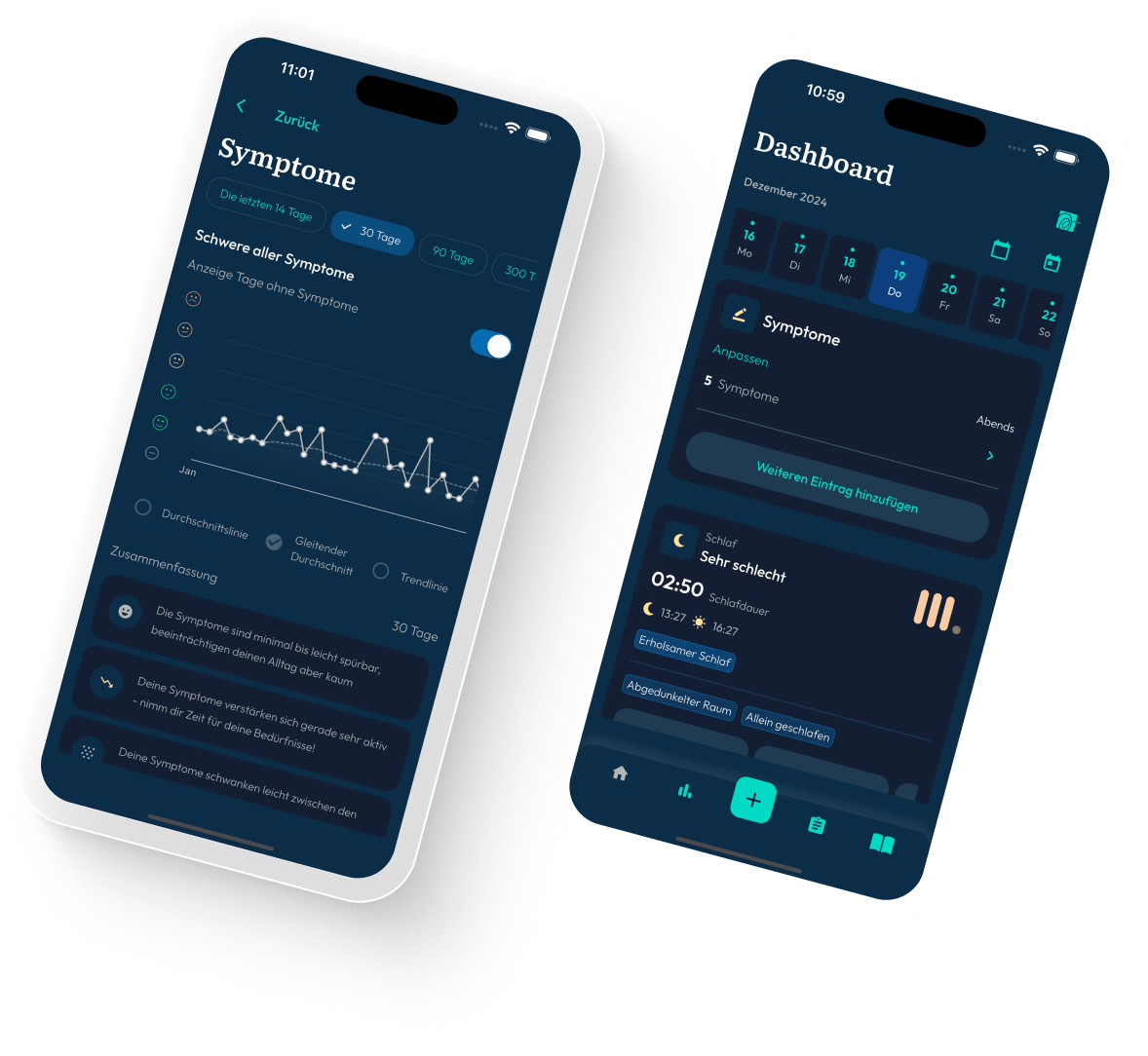
Track symptoms and exertion to recognise post-exertional malaise and crash patterns in time.
Usually not. It is more often an individual pattern of several smaller changes that together suggest rising overload.
No. Wearables can add useful context, but many early signs can also be recognized through careful self-observation and simple tracking.
It often helps to plan the next one or two days more conservatively: fewer demands, fewer sensory triggers, more buffer, and closer observation of symptoms.
Every article is editorially reviewed, framed with medical context, and backed by primary sources you can verify.
Reviewed content with 3 sources
Educational context – not a substitute for medical diagnosis
Links to related knowledge, questionnaires, and methodology
PEM and pacing become more actionable when symptom burden and function are captured in a structured way.
Useful when delayed worsening after activity raises the question of ME/CFS-oriented symptom structure.
Best when daily limitation, recovery instability, and functional burden should be documented.
Compare all available assessments and choose the one that matches the real question.