
Loading...
Loading...
Where ME/CFS and Long COVID overlap – and why clearer differentiation still matters.
Short answer
ME/CFS and Long COVID can overlap strongly, especially when PEM, reduced capacity, and cognitive symptoms are central.
Long COVID, however, is a broader umbrella covering different long-term outcomes after SARS-CoV-2 infection.
Clearer differentiation matters because symptom profiles, course, and everyday strategies can differ.
ME/CFS and Long COVID are often discussed together because key symptoms can overlap. At the same time, not every Long COVID presentation is automatically ME/CFS.
Important differences
Long COVID is an umbrella term for different long-term outcomes.
ME/CFS is a more specific illness pattern with PEM at its center.
There is real overlap, but they are not identical.
Response to exertion is especially important in practical differentiation.
Author
Frederik Marquart
Founder & CEO, Elara Health
Review
Elara Health Medical & Research Review
Scientific and patient-centered quality review
Last updated
April 15, 2026
Both Long COVID and ME/CFS can involve fatigue, brain fog, sleep problems, and reduced capacity.
The overlap becomes especially important when PEM is a clear pattern and exertion leads to delayed worsening.
Long COVID covers a broad range of possible long-term outcomes. Not all affected people show the same pattern or the same exertion-related worsening.
That is why it is important not to equate the terms too quickly, but to look more closely at course, exertion response, and symptom emphasis.
For affected people, classification can influence which daily strategies are more useful and how cautiously exertion should be managed.
When PEM or delayed exertion worsening is suspected, pacing and tracking become especially important.
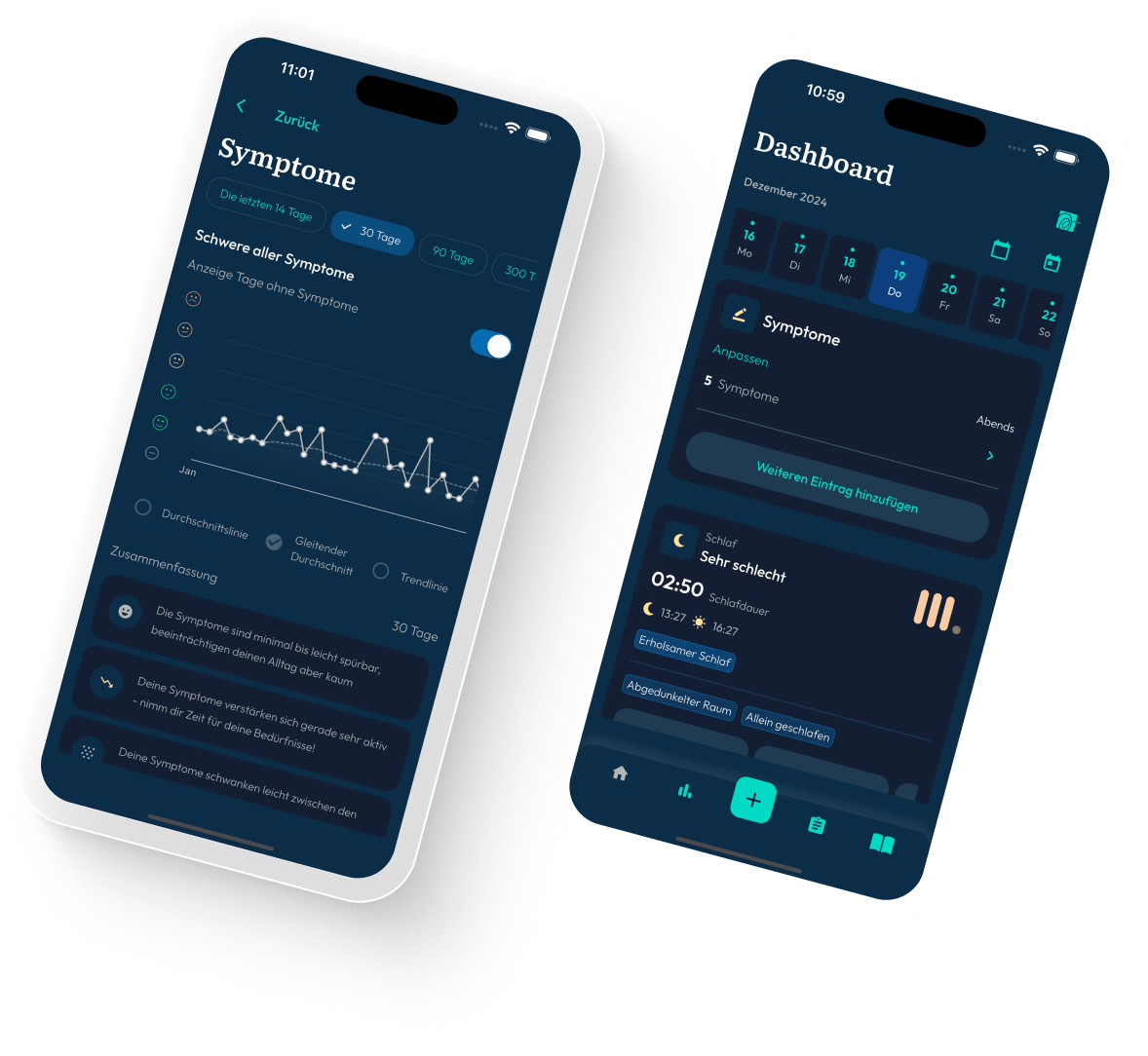
Record symptoms, exertion, and recovery to understand your trajectory – with the Elara app.
Yes, that is possible. Especially when PEM and markedly reduced capacity become central, the symptom pattern can closely resemble ME/CFS.
No. There is overlap, but Long COVID is broader and ME/CFS is more specifically defined.
Because it often determines whether careful pacing and exertion management should play a particularly central role.
Every article is editorially reviewed, framed with medical context, and backed by primary sources you can verify.
Reviewed content with 3 sources
Educational context – not a substitute for medical diagnosis
Links to related knowledge, questionnaires, and methodology
Use questionnaires when explanation should turn into structured symptom capture, diagnostic orientation, or severity documentation.
Best when the main question is whether the symptom pattern fits ME/CFS-oriented criteria.
Use when function, daily limitation, and severity need clearer structure over time.
Review purpose, limits, and safe interpretation before treating any score as a conclusion.