
Loading...
Loading...
In ME/CFS, pacing means adjusting activity to personal capacity and limiting PEM risk earlier – why it is so central and what matters in practice.
Definition
Pacing in ME/CFS means adjusting activity to personal capacity and deliberately avoiding overload patterns.
It matters especially because PEM often makes the cost of activity visible only later.
Pacing works best when it becomes a repeatable daily principle instead of a reactive last-minute fix.
In ME/CFS, the usual model of effort followed by normal recovery often does not apply. Pacing is therefore not about maximizing output, but about protecting stability and reducing repeated overload. People who want to document daily function and severity more clearly can later add FUNCAP-27.
What matters most
Pacing follows individual tolerance, not outside norms.
The goal is stabilization, not constant limit testing.
PEM makes pacing especially important in ME/CFS.
Pacing works better with buffer time, planning, and multi-day observation.
Author
Frederik Marquart
Founder & CEO, Elara Health
Review
Elara Health Medical & Research Review
Scientific and patient-centered quality review
Last updated
April 15, 2026
In ME/CFS, even moderate exertion can lead to disproportionate worsening. If decisions are made only from current energy levels, this dynamic is easy to underestimate.
Pacing creates a framework where activity is judged by its real impact on the following hours and days, not by motivation or outside expectations.
In practice, pacing means making activities smaller, building in transitions and recovery time, and not waiting until collapse to respond. Doing slightly less earlier often costs less than paying with several worse days later.
It also means counting cognitive and emotional load, not just physical activity.
daily planning with buffer time
breaking tasks into smaller steps
including sensory and cognitive load
watching patterns across several days
Pacing is not simply withdrawal, not blanket avoidance at all costs, and not a rigid points system that ignores real life.
It is an adaptive strategy: observe, adjust, prioritize, and better protect personal stability.
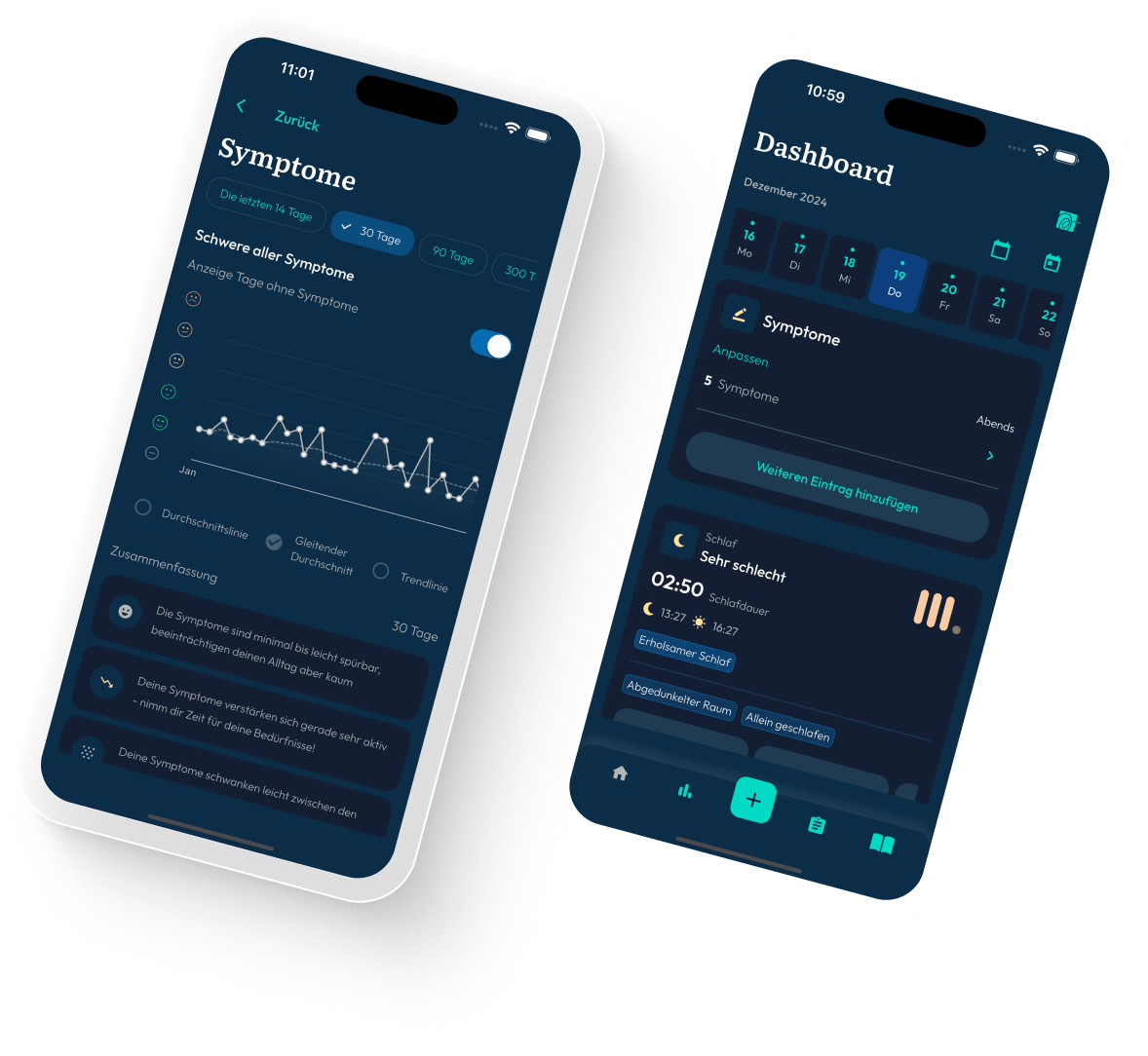
Capture exertion, recovery, and warning signs in a pacing diary – and steer daily life with data.
No. Pacing does not mean giving up planning. It means planning more realistically, with buffer time and better awareness of the likely after-effects.
Yes. In ME/CFS, cognitive effort can be a major trigger. Pacing should therefore always include more than physical activity alone.
The ideas are closely related. Pacing is the practical application of managing limited capacity carefully and fits well with Energy Envelope Theory.
Every article is editorially reviewed, framed with medical context, and backed by primary sources you can verify.
Reviewed content with 3 sources
Educational context – not a substitute for medical diagnosis
Links to related knowledge, questionnaires, and methodology
PEM and pacing become more actionable when symptom burden and function are captured in a structured way.
Useful when delayed worsening after activity raises the question of ME/CFS-oriented symptom structure.
Best when daily limitation, recovery instability, and functional burden should be documented.
Compare all available assessments and choose the one that matches the real question.