
Loading...
Loading...
ME/CFS is a severe chronic multisystem illness. Typical features include PEM, markedly reduced capacity, and cognitive, autonomic, or sleep-related symptoms.
Definition
ME/CFS is a severe chronic multisystem illness with markedly reduced exertion tolerance and PEM as a core feature.
A central feature is PEM, meaning delayed and disproportionate worsening after exertion.
The illness involves far more than tiredness and may affect body, cognition, sleep, and autonomic regulation at the same time.
ME/CFS stands for Myalgic Encephalomyelitis / Chronic Fatigue Syndrome. Behind the label is a severe chronic illness that can deeply affect activity, cognition, sleep, and daily function. If symptoms need to be documented more clearly, a symptom check can later support structured self-tracking.
Key features
markedly reduced capacity
PEM as a central core feature
common cognitive, autonomic, and sleep-related symptoms
significant impact on daily life
Author
Frederik Marquart
Founder & CEO, Elara Health
Review
Elara Health Medical & Research Review
Scientific and patient-centered quality review
Last updated
April 15, 2026
The word “fatigue” often creates misunderstandings. ME/CFS does not simply mean feeling tired; it involves a deep disruption of capacity, often affecting several systems at once.
Many people experience not only low energy, but also brain fog, pain, sleep problems, sensory overload, or orthostatic symptoms.
PEM means that exertion is not only tiring, but often leads to a delayed and disproportionate worsening of symptoms.
This pattern is one reason ME/CFS is so hard in everyday life: limits are not always visible in the moment, but often show up later.
ME/CFS often changes how work, relationships, appointments, and even small daily tasks can be managed.
That is why pacing, structured observation, and realistic awareness of after-effects are central tools for many affected people.
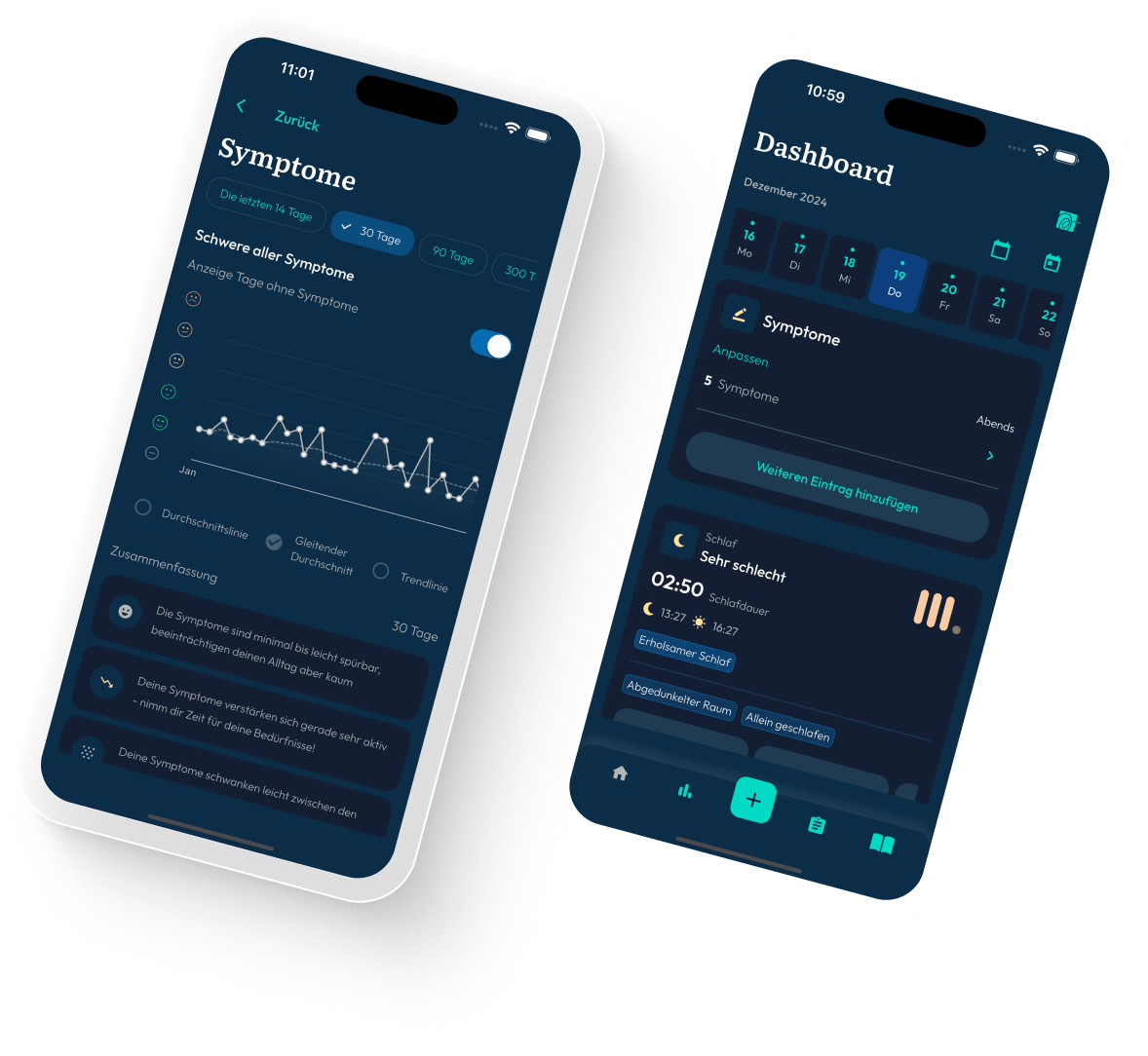
Record symptoms, exertion, and recovery to understand your trajectory – with the Elara app.
No. There can be overlap in some symptoms, but ME/CFS is especially shaped by PEM and a distinctly altered response to exertion.
No. Severity varies widely. People can still be clearly affected even if they are able to do some activities.
Yes. Because consequences of exertion can be delayed, tracking often helps people understand their own patterns more clearly.
Every article is editorially reviewed, framed with medical context, and backed by primary sources you can verify.
Reviewed content with 3 sources
Educational context – not a substitute for medical diagnosis
Links to related knowledge, questionnaires, and methodology
Use questionnaires when explanation should turn into structured symptom capture, diagnostic orientation, or severity documentation.
Best when the main question is whether the symptom pattern fits ME/CFS-oriented criteria.
Use when function, daily limitation, and severity need clearer structure over time.
Review purpose, limits, and safe interpretation before treating any score as a conclusion.