
Loading...
Loading...
Post-exertional malaise is a delayed and disproportionate worsening of symptoms after exertion – with clear differences from normal exhaustion in timing and recovery.
Definition
Post-exertional malaise is not normal tiredness, but a marked and often delayed worsening of symptoms after exertion.
The reaction can affect physical, cognitive, and autonomic symptoms and often appears with a delay.
That delay is one reason personal limits can be so hard to read in everyday life.
For many people with ME/CFS, PEM is the defining symptom. Anyone trying to understand why activity can trigger a later crash needs a precise explanation of PEM. For structured self-tracking, a symptom check and functional questionnaire can later add useful context.
What matters most
PEM is not just one symptom; it is often a broader worsening pattern.
The trigger can be physical, cognitive, or emotional.
The key issue is not absolute activity volume, but individual tolerance.
Severity and timing vary considerably between people.
Author
Frederik Marquart
Founder & CEO, Elara Health
Review
Elara Health Medical & Research Review
Scientific and patient-centered quality review
Last updated
April 15, 2026
Ordinary post-activity tiredness usually improves with rest and makes sense for the situation. With PEM, the reaction is often stronger, longer, and not proportional to the preceding exertion.
The worsening often goes beyond fatigue and may include cognitive dysfunction, pain, poor sleep, sensory overload, or autonomic symptoms.
Many people do not notice the main deterioration during the activity itself, but only hours or days later. That makes the trigger difficult to identify in real life.
This is why structured observation, pacing, and pattern recognition over several days are usually more useful than relying on gut feeling in the moment.
Today’s exertion may trigger tomorrow’s crash.
An activity can feel manageable at first.
Without tracking, patterns are easy to miss.
The most helpful response is rarely a vague instruction to “rest more.” What matters more is understanding which types of exertion are risky and how early warning patterns show up for you.
That can include symptom diaries, activity logs, sleep tracking, or wearable data. The goal is not perfect control, but better timing and more cautious energy management.
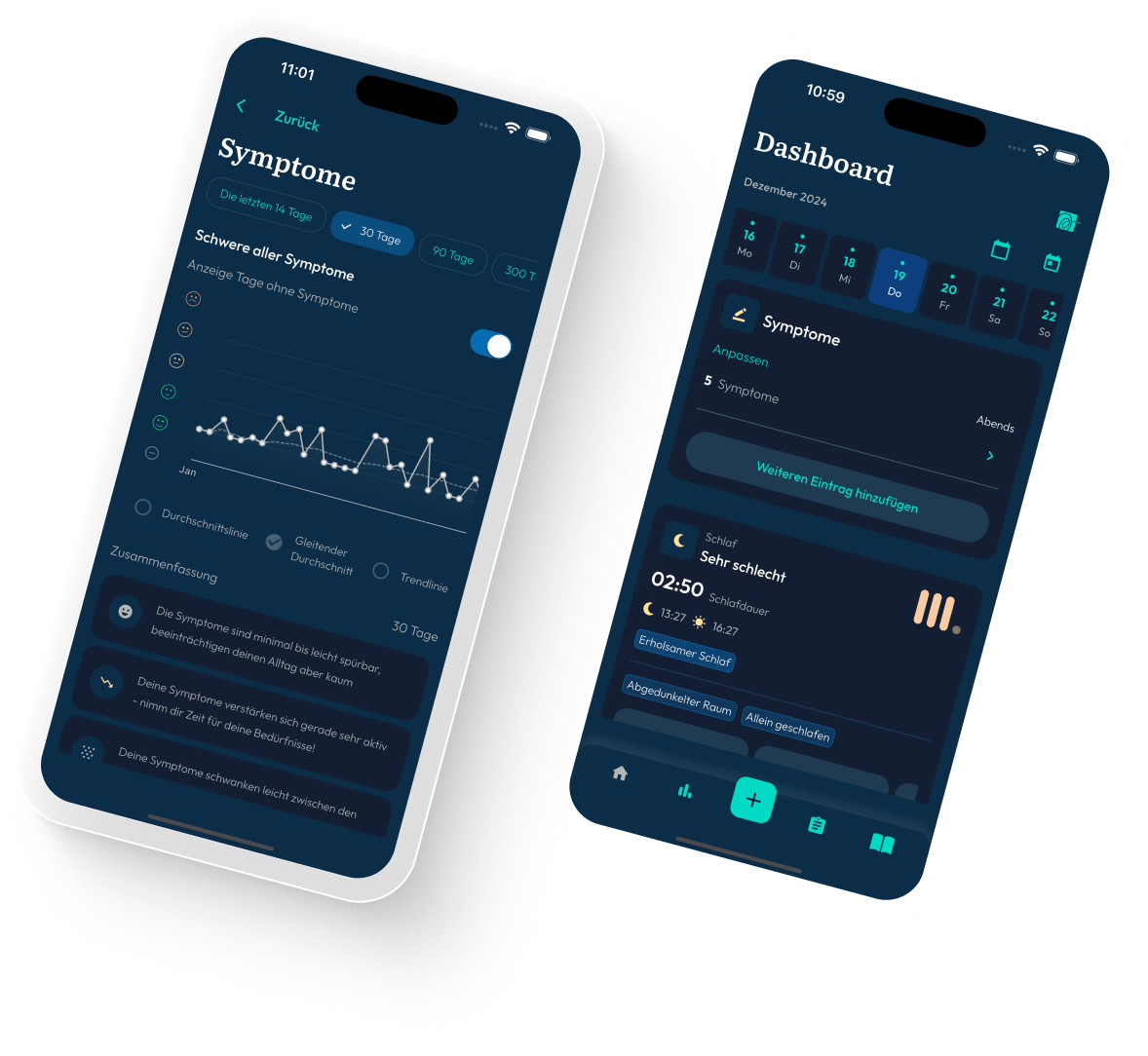
Track symptoms and exertion to recognise post-exertional malaise and crash patterns in time.
Yes. For many people, cognitive or emotional effort can worsen PEM just as physical activity can.
No. That is a common window, but timing varies. Some people notice changes earlier, while others experience a more delayed worsening.
PEM is especially associated with ME/CFS, but it is also important in Long COVID and related post-infectious symptom patterns.
Every article is editorially reviewed, framed with medical context, and backed by primary sources you can verify.
Reviewed content with 3 sources
Educational context – not a substitute for medical diagnosis
Links to related knowledge, questionnaires, and methodology
PEM and pacing become more actionable when symptom burden and function are captured in a structured way.
Useful when delayed worsening after activity raises the question of ME/CFS-oriented symptom structure.
Best when daily limitation, recovery instability, and functional burden should be documented.
Compare all available assessments and choose the one that matches the real question.