
Loading...
Loading...
Why PEM can not only start with a delay, but also last for very different amounts of time and shape the course of several days.
Short answer
PEM can last for a few hours, several days, or in some phases much longer.
Its duration often depends on baseline stability, the kind of exertion, cumulative load, and whether enough recovery time was protected.
A rigid average matters less than your own recurring pattern across multiple episodes.
Many people want to know not only when PEM starts, but how long the worsening lasts. That question is highly practical because it changes how cautiously the next hours and days need to be planned.
Key points
PEM duration is individual and can fluctuate a lot.
A shorter crash does not rule out a true PEM pattern.
Repeated load in a short window often lengthens the course.
Pacing gets better when you track recovery length, not only the trigger.
Author
Frederik Marquart
Founder & CEO, Elara Health
Review
Elara Health Medical & Research Review
Scientific and patient-centered quality review
Last updated
April 23, 2026
PEM is not a rigid mechanism with the same duration after every trigger. Even the type of exertion can change the pattern, because physical, cognitive, and emotional load often interact differently.
Baseline matters too. If someone is already unstable, the same activity may lead to a longer or heavier worsening.
Some people feel PEM for only a few hours, others for one to three days, and some for much longer. Often the key issue is not only the peak, but the extended recovery afterwards.
That is why it helps to look beyond the “crash day” and ask how long it takes for capacity, sleep, cognition, and sensory tolerance to move closer to baseline again.
a few hours of clear decline
one to three days of markedly worse function
longer phases after cumulative overload
wave-like courses rather than a clean start and end point
If you only track the trigger but not the duration, it is easy to underestimate the real cost of an activity. For pacing, it therefore helps to document how long recovery actually takes.
That makes it easier to spot which demands do not just trigger symptoms, but destabilize whole days or even longer stretches.
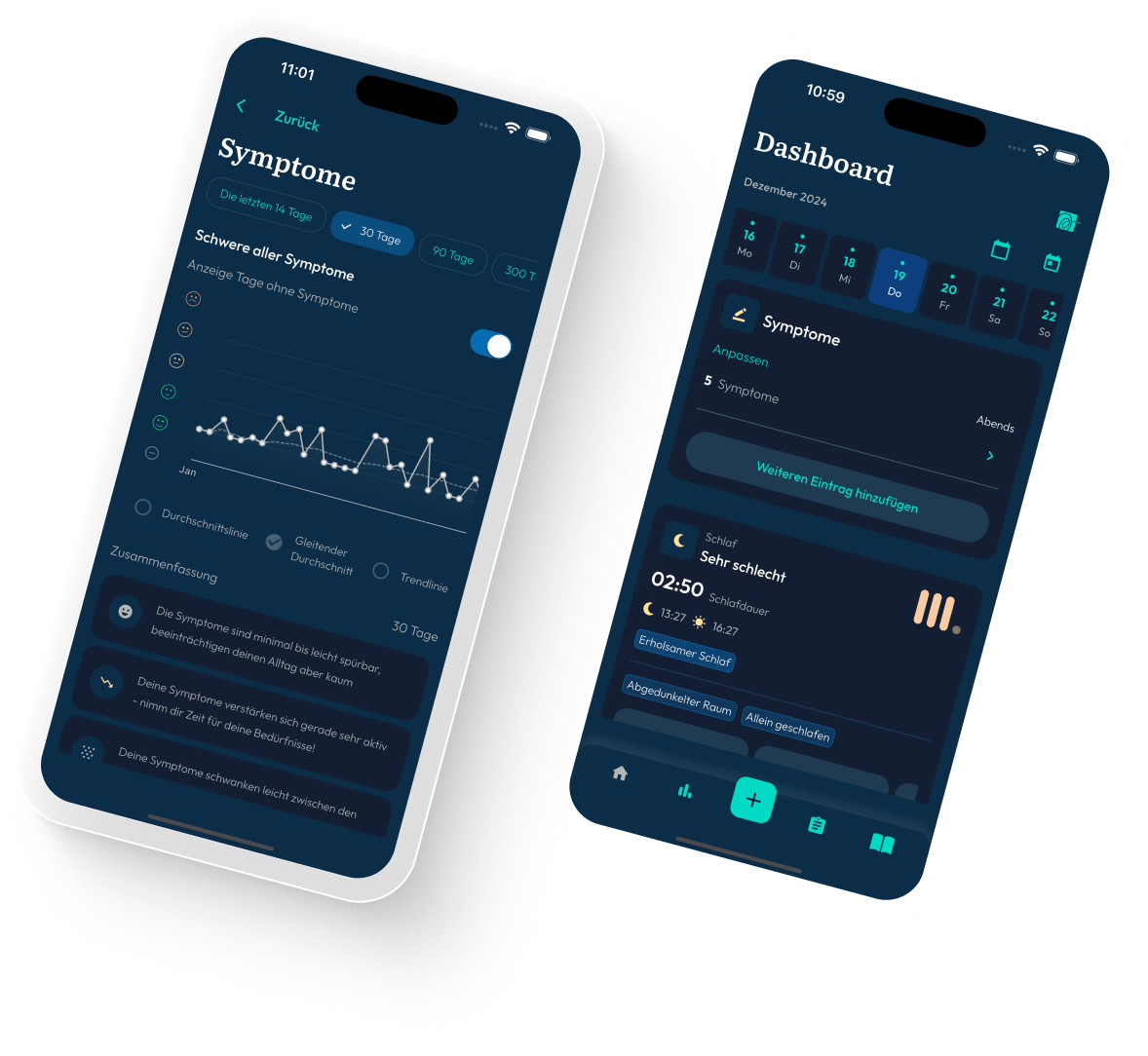
Track symptoms and exertion to recognise post-exertional malaise and crash patterns in time.
No. Shorter but clearly exertion-linked worsening can still be very relevant if it happens repeatedly and shapes your usable capacity.
Cumulative load, returning to activity too early, poor sleep, or an already unstable baseline often play a role.
It helps to note triggers, onset, main symptoms, the course across several days, and the point at which you feel closer to baseline again.
Often yes, but not always because of one single activity alone. Cumulative load, poor sleep, or an already unstable baseline can all extend recovery. That is why the pattern over several days matters more than one isolated moment.
Every article is editorially reviewed, framed with medical context, and backed by primary sources you can verify.
Reviewed content with 4 sources
Educational context – not a substitute for medical diagnosis
Links to related knowledge, questionnaires, and methodology
PEM and pacing become more actionable when symptom burden and function are captured in a structured way.
Useful when delayed worsening after activity raises the question of ME/CFS-oriented symptom structure.
Best when daily limitation, recovery instability, and functional burden should be documented.
Compare all available assessments and choose the one that matches the real question.