
Loading...
Loading...
Lab marker Fibrose with reference ranges
Reference range
Kein direkter Referenzbereich; indirekte Marker wie Hyaluronsäure < 50 µg/l (laborabhängig)
Fibrose should not be read as an isolated number only. This short overview summarizes when the marker matters, which questions it does not answer on its own, and what broader context makes the result more useful.
Relevance
Fibrose is most useful when it is interpreted together with the symptom pattern, the relevant category context, and the broader diagnostic question behind the test.
Limits
Fibrose does not replace symptom timing, functional assessment, or the wider clinical picture. A marker may be informative without being the whole answer.
Next context
The next useful step is usually to connect Fibrose to related markers, symptoms, and the broader context of the test rather than reading it as an isolated endpoint.
Document and understand your lab values in relation to your symptoms.
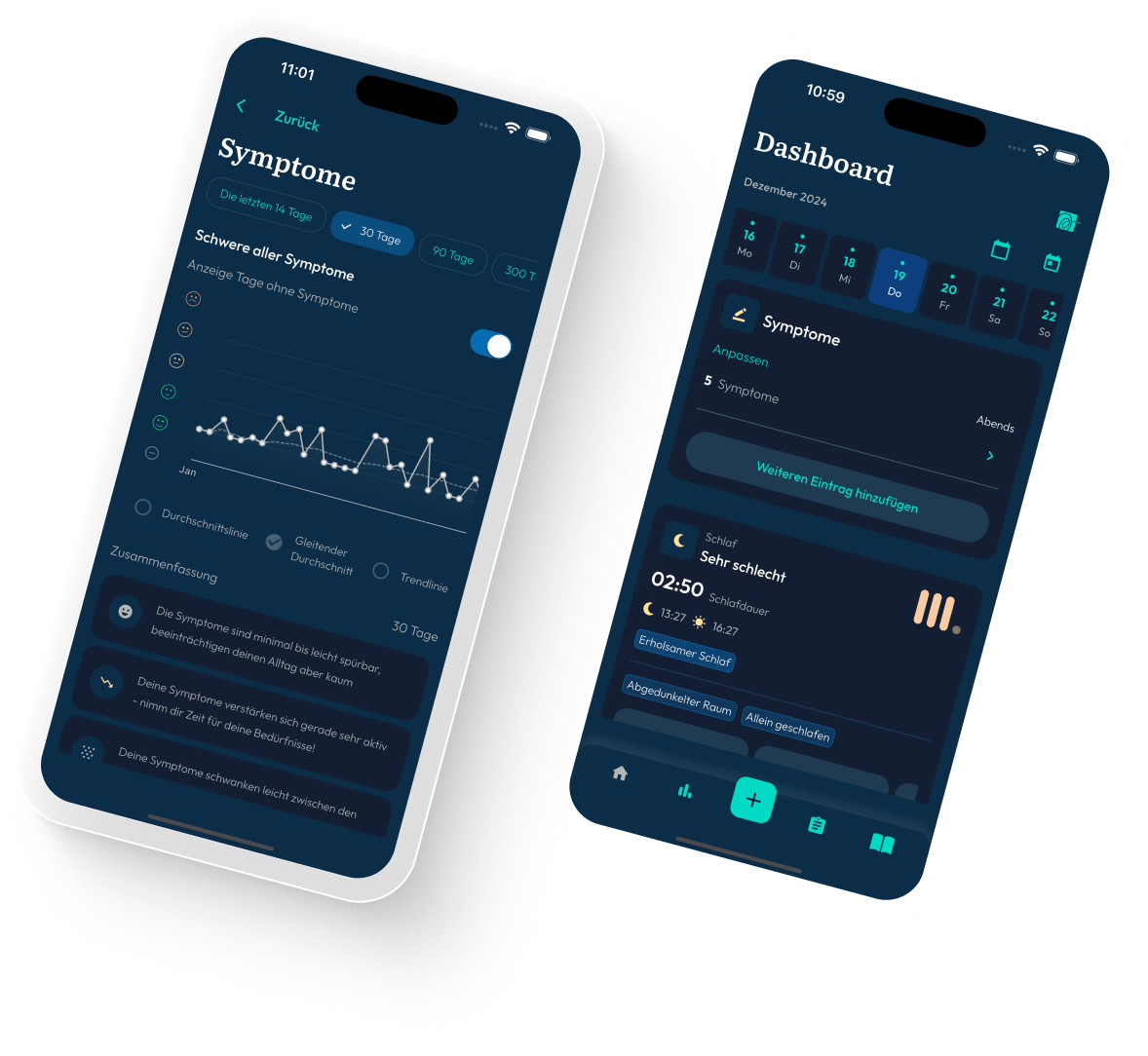
This biomarker gains value when it is connected to symptom patterns, daily function, and structured self-observation instead of being read in isolation.
ME/CFS
Reduced capacity, multisystem symptoms, and delayed worsening often make more sense when the broader ME/CFS pattern is considered.
Pacing
Markers linked to sleep, stress, recovery, hormones, or metabolism often become more useful when viewed through pacing and daily load management.
Questionnaires
Questionnaires help connect biomarkers to symptom patterns, functional limits, and patient-reported change over time.
Fibrose is most useful when it is interpreted together with the symptom pattern, the relevant category context, and the broader diagnostic question behind the test.
Fibrose does not replace symptom timing, functional assessment, or the wider clinical picture. A marker may be informative without being the whole answer.
The next useful step is usually to connect Fibrose to related markers, symptoms, and the broader context of the test rather than reading it as an isolated endpoint.
from category Liver
Ref: 40 - 130
Ref: 0 - 50
Ref: 0 - 50
Ref: 0 - 1.1
Ref: 0 - 0.3
Ref: 0 - 0.8
Kidney, electrolyte, autonomic, cardiac, liver, or nervous-system-adjacent markers often need symptom timing and pacing context to become useful.
Pacing
Pacing makes biomarkers and symptom timing more actionable in everyday management.
PEM
When symptoms escalate later rather than immediately, a recovery-oriented reading becomes more important.
Whitepapers
The whitepapers connect physiology, longitudinal interpretation, and Elara’s monitoring logic.